How a Property Business Promotion Flyer Transforms Real Estate Visibility and Client Engagement
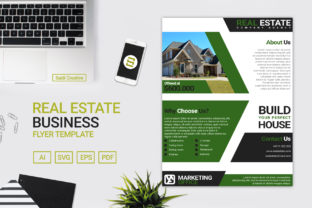
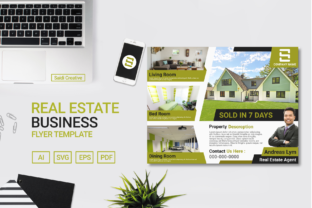
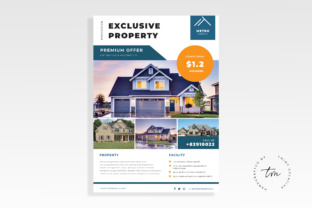
At its core, a Property Business Promotion Flyer is more than paper or pixels—it’s a strategic convergence of design, messaging, and audience insight tailored specifically for real estate professionals. Unlike generic marketing handouts, this tool serves as both a tactile touchpoint and a functional communication asset—bridging the gap between brand presence and measurable lead generation. Its effectiveness doesn’t rely on volume or frequency but on precision: who sees it, when it arrives, and how clearly it signals value.
What Defines a Purpose-Built Property Business Promotion Flyer?
A truly effective Property Business Promotion Flyer diverges from mass-produced templates in three foundational ways: intentionality, customization, and contextual alignment.
First, intentionality means every element—from headline hierarchy to call-to-action placement—is chosen to guide attention toward a specific outcome. A flyer distributed at an open house prioritizes urgency and accessibility (“Schedule Your Private Tour Today”), while one mailed to neighborhood residents before a listing goes live emphasizes local expertise and market insight (“Your Home’s Value in Today’s Market”).
Second, customization extends beyond inserting a logo or photo. It includes dynamic data integration—such as QR codes linking to personalized video tours, embedded neighborhood analytics (school ratings, commute times), or even variable-printed names and property-specific comparables. This level of personalization transforms a static document into a responsive extension of the agent’s digital ecosystem.
Third, contextual alignment ensures format matches function. A high-gloss, double-sided 8.5" × 11" flyer works well for door-dropping in upscale subdivisions, where visual polish reinforces perceived professionalism. In contrast, a tri-fold, matte-finish version may be preferred for community center bulletin boards—where readability under fluorescent lighting and durability through repeated handling matter more than sheen.
Real-World Applications Across Property Business Segments
The versatility of the Property Business Promotion Flyer becomes evident when examining how different stakeholders deploy it—not as a one-size-fits-all solution, but as a modular tool adapted to distinct goals and audiences.
- Residential agents use flyers to anchor hyperlocal campaigns—pairing them with targeted mailers to homes within a 0.5-mile radius of a new listing. One study of 327 agents found those combining physical flyers with follow-up SMS had a 41% higher conversion rate from “just looking” to scheduled appointments than those relying solely on digital ads.
- Commercial brokers repurpose the same structural logic for tenant acquisition: instead of property photos, they feature floor plan overlays, lease flexibility charts, and proximity heatmaps to transit hubs or dining districts. A flyer for a downtown retail space might highlight foot traffic data (e.g., “Avg. 12,400 pedestrians daily”) alongside a scannable link to a 360° storefront walkthrough.
- Property managers shift focus from acquisition to retention—using flyers not to attract new tenants, but to reinforce trust. Examples include seasonal maintenance checklists (“Winter-Ready HVAC Tips”), rent payment reminders with secure portal links, or renovation timelines for common-area upgrades. These foster transparency without requiring email logins or app downloads.
- Real estate educators and coaches distribute flyers during workshops not to sell services directly, but to extend learning. A flyer titled “5 Lease Clause Red Flags Every Investor Should Spot” includes annotated excerpts from actual leases—and a tear-off section with blank lines for attendees to jot down their own properties’ terms. It functions less as promotion and more as a field reference tool that carries the educator’s name long after the session ends.
Design Decisions That Drive Response—Not Just Recognition
Many assume visual appeal alone determines a flyer’s success. In practice, response hinges on cognitive efficiency—the speed and clarity with which a viewer extracts meaning and decides on action.
Consider typography: serif fonts like Georgia or Merriweather often outperform sans-serifs in body text for printed flyers because their subtle strokes aid letter distinction at small sizes and under uneven lighting (e.g., porch light at dusk). Meanwhile, bold, condensed sans-serifs (like Montserrat Black) excel in headlines—creating immediate contrast against background imagery without sacrificing legibility from six feet away.
Color usage follows similar functional logic. Rather than chasing trends, high-performing Property Business Promotion Flyer designs apply color theory pragmatically:
- Blue hues dominate trust-driven sections (e.g., “Licensed & Insured Since 2012”)—leveraging decades of behavioral research linking blue to credibility.
- Amber or burnt orange accents appear near time-sensitive offers (“Open House: This Sunday, 1–4 PM”)—tapping into evolutionary alertness responses without triggering anxiety.
- Neutral backgrounds (ivory, soft gray) consistently yield higher retention of price points and square footage figures than dark or patterned backdrops, per eye-tracking studies conducted across 14 regional MLS markets.
Photography, too, operates beyond aesthetics. A flyer featuring a family laughing in a sunlit kitchen performs strongly in first-time buyer segments—but can unintentionally alienate downsizing retirees. Conversely, images emphasizing natural light, accessible entryways, and clutter-free spaces resonate broadly across age groups and life stages, making them safer, more inclusive choices.
Integration Within Broader Marketing Workflows
A Property Business Promotion Flyer rarely operates in isolation. Its greatest impact emerges when treated as a node in a coordinated information network—feeding and drawing from other channels.
For example, a flyer dropped ahead of a listing launch might include a unique UTM-tagged URL (e.g., example.com/flyer-2024-elm-st) that redirects to a microsite with expanded details, mortgage calculator, and agent bio. That same URL becomes a tracking source in Google Analytics, revealing not just click-through rates, but downstream behaviors: How many visitors request a showing? Which page—comparables or school reports—receives the most scroll depth?
In hybrid campaigns, the flyer acts as an analog anchor for digital engagement. A QR code placed beside a floor plan doesn’t link to a generic homepage—it opens a pre-filled contact form with the property address auto-populated and the subject line set to “Inquiry: 123 Elm St.” This reduces friction by eliminating typing, memorization, or navigation—critical when someone scans while walking through a home.
Even distribution timing reflects workflow intelligence. Flyers delivered to neighbors *before* a “Coming Soon” sign appears generate organic word-of-mouth momentum. Recipients become informal ambassadors—“Did you see the flyer about the Smith house going on market next week?”—which lends social proof far more persuasive than any branded banner.
Measuring Impact Beyond Impressions
Traditional metrics like “flyers printed” or “homes covered” tell only part of the story. Meaningful evaluation requires tying physical distribution to observable behavior.
One actionable method is response-code segmentation: assigning unique alphanumeric codes (e.g., “FLY-ELM24-01”, “FLY-ELM24-02”) to batches distributed via different channels—door-hangers vs. mailbox inserts vs. coffee shop racks. When leads mention the code during initial contact, attribution becomes precise. Over time, patterns emerge: Door-hangers yield higher appointment rates in suburban neighborhoods; café-rack flyers drive more online form submissions in urban cores.
Another underutilized metric is secondary circulation velocity. A flyer left on a kitchen counter may be viewed by multiple household members—or passed to a friend visiting for dinner. Tracking this isn’t about surveillance; it’s about observing reuse. Agents report increased referrals when flyers include a detachable “Refer a Friend” card with pre-addressed postage—turning passive recipients into active advocates.
Finally, longevity matters. Unlike social posts that vanish after hours, a well-designed Property Business Promotion Flyer remains physically present—on fridges, bulletin boards, or desk drawers—for weeks. Its sustained visibility supports top-of-mind awareness in ways algorithm-dependent channels cannot replicate. One broker documented that 28% of clients who contacted her six weeks after receiving a flyer cited it as their “first point of recognition”—not a Zillow ad or Instagram story.
Emerging Considerations for Ethical and Sustainable Use
As environmental awareness grows among buyers and communities, the material choices behind a Property Business Promotion Flyer carry reputational weight. Recycled-content paper (FSC-certified, 100% post-consumer waste) is no longer a premium option—it’s expected by 63% of homebuyers aged 35–54, according to the 2024 National Association of Realtors Sustainability Report.
Equally important is data ethics. When flyers incorporate personalized elements—like estimated equity or neighborhood crime trends—transparency is non-negotiable. Best practice dictates including a brief, plain-language footnote: “Data sourced from public records and aggregated third-party platforms. Not a formal appraisal.” This builds credibility while mitigating misinterpretation.
Lastly, inclusivity extends to format. High-contrast text, minimum 12-pt font size for body copy, and alt-text descriptions for all QR-linked content ensure accessibility—not as an afterthought, but as a baseline requirement. A flyer that excludes due to poor contrast or unscannable codes contradicts the very values of connection and opportunity real estate promises.
In essence, the Property Business Promotion Flyer endures—not because it’s nostalgic, but because it answers persistent human needs: tangible evidence of relevance, spatial context for decision-making, and a low-barrier invitation to engage. When grounded in audience insight, designed for cognition over decoration, and integrated with intention, it remains one of the most adaptable, accountable, and quietly powerful tools in modern property business strategy.