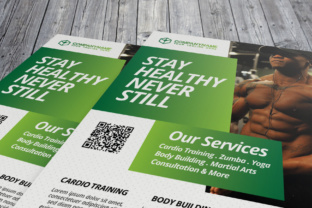
Fitness Flyers: A Practical Guide for Choosing the Right Format
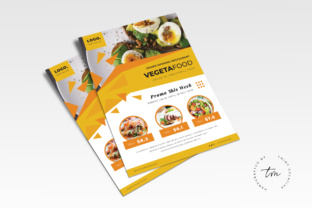
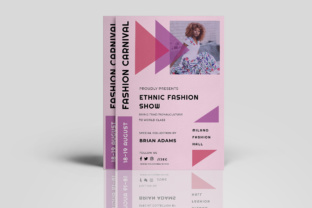
Fitness flyers are single-page, printed or digital handouts designed to communicate fitness-related information quickly and clearly. They’re commonly used by gyms, personal trainers, wellness centers, and community programs to promote classes, explain workout techniques, outline nutrition basics, or support behavior change. Unlike apps, videos, or multi-page guides, fitness flyers prioritize immediacy and simplicity—distilling key ideas into scannable visuals and concise text.
What Sets Fitness Flyers Apart
Their defining trait is intentional constraint: one page, limited space, no navigation layers. This forces focus on core messages—whether it’s proper squat form, hydration tips for beginners, or a 7-day mobility challenge. Because they’re often distributed in person—at front desks, bulletin boards, or event booths—they rely on visual hierarchy, clear typography, and intuitive layout to capture attention within seconds.
Fitness flyers aren’t meant to replace comprehensive resources. Instead, they serve as tactical touchpoints: a reminder at the right moment, a quick reference mid-workout, or a low-barrier entry point for someone new to fitness. Their effectiveness hinges less on depth and more on clarity, relevance, and timing.
How They Compare to Other Fitness Communication Formats
Understanding where fitness flyers fit requires comparing them with other common tools—not as better or worse, but as different instruments for different jobs.
vs. Digital Apps and Tracking Tools
Apps offer interactivity, progress tracking, and personalization—but demand screen time, setup, and ongoing engagement. A fitness flyer doesn’t track reps or sync data, but it can be taped to a mirror, pinned to a fridge, or slipped into a gym bag without batteries or logins. For someone overwhelmed by tech or seeking offline reinforcement, a well-designed flyer may land more reliably than a notification buried in an app.
vs. Video Demonstrations
Videos excel at showing movement quality and sequencing—especially for complex lifts or flow-based routines. Yet they require bandwidth, sound (or captions), and focused attention. A fitness flyer can summarize key cues (“chest up,” “knees aligned over toes”) alongside simple line drawings, letting users glance and go. It won’t replace slow-motion analysis, but it supports retention between video sessions.
vs. Multi-Page Handouts or PDF Guides
Longer documents allow deeper explanations, citations, and progressive programming. But they’re rarely read cover-to-cover. Studies on health communication show that people retain significantly more from a single, well-structured page than from a dense 6-page guide—even when content overlaps. Fitness flyers leverage that reality: they’re optimized for *use*, not just consumption.
Strengths and Real-World Fit
Fitness flyers shine in specific, practical contexts:
- Onboarding new members: A clean, welcoming flyer listing facility rules, towel policies, and staff names builds confidence faster than a 20-minute orientation talk.
- Supporting technique consistency: Placing a flyer beside a cable machine with labeled grip positions, range-of-motion markers, and common errors helps users self-correct without constant trainer input.
- Encouraging habit stacking: A small, colorful flyer titled “Add One Move” might suggest pairing a 30-second plank with brushing teeth—simple, actionable, and physically present where the habit already lives.
- Reaching low-digital-engagement audiences: Older adults, shift workers, or those with limited smartphone access often respond more readily to tangible, analog tools like flyers than to QR-coded links or app invites.
They also scale well. Printing 500 copies of a seasonal challenge flyer costs less than developing a custom microsite—and updates can be made in under an hour if designed with editable templates.
Limitations and When to Look Elsewhere
Fitness flyers have clear boundaries. They’re not ideal when:
- Personalization is essential: A flyer can’t adjust recommendations based on heart rate variability, injury history, or real-time fatigue. Someone recovering from shoulder surgery needs tailored guidance a static handout can’t provide.
- Step-by-step progression matters: Teaching a beginner how to safely advance from assisted pull-ups to unassisted ones involves nuance—tempo changes, volume shifts, recovery signals—that exceeds a flyer’s scope.
- Accountability or feedback loops are needed: Flyers don’t record completion, prompt reflection, or adapt based on user input. If someone needs encouragement after missed workouts or wants to log daily energy levels, a journal or app remains more appropriate.
- Regulatory or clinical detail is required: For medical clearance forms, detailed contraindications, or HIPAA-compliant intake processes, formal documentation standards outweigh design convenience.
In these cases, fitness flyers work best as supplements—not substitutes. A physical therapist might give a patient a flyer showing home stretches *alongside* a follow-up call schedule and symptom-tracking sheet.
Design Quality Makes the Difference
Not all fitness flyers deliver equal value. A cluttered, text-heavy version defeats the purpose. Effective ones share traits:
- One clear objective: Is it to teach, remind, motivate, or inform? Trying to do all four dilutes impact.
- Visual-first structure: Icons, arrows, and minimal color coding guide the eye before reading begins. A squat cue flyer might use red circles to mark knee alignment points—not paragraphs explaining biomechanics.
- Plain-language copy: Avoiding jargon like “eccentric loading” in favor of “lower slowly for 3 seconds” improves accessibility across literacy and experience levels.
- Print- and screen-friendly formatting: High-contrast text, scalable vector graphics, and responsive PDF exports ensure legibility whether viewed on a phone or laminated and posted.
A poorly designed flyer—even with accurate content—can confuse more than clarify. That’s why many professionals collaborate with graphic designers or use evidence-informed templates rather than building from scratch each time.
Making the Right Choice for Your Needs
Choosing whether to use fitness flyers depends less on trendiness and more on alignment with your goals, audience, and environment.
Ask yourself:
- Is the message urgent, repeatable, or location-specific? (e.g., “Hydrate now” near water fountains → yes.)
- Do users benefit from physical presence—something they can hold, annotate, or post? (e.g., parents keeping a “Screen Time + Movement Swap” chart on the fridge → yes.)
- Is the audience likely to engage with brief, visual prompts—or do they need scaffolding, feedback, or adaptation? (e.g., teens learning foundational movement patterns may respond well; elite athletes refining competition strategy likely won’t.)
If you’re evaluating options—whether as a trainer designing client materials, a wellness coordinator planning a workplace initiative, or someone exploring self-guided tools—consider fitness flyers not as a standalone solution, but as one piece of a layered approach. Pair them with verbal instruction, short videos, or group discussion to reinforce learning. Use them where immediacy and simplicity add tangible value—not where depth or interactivity is non-negotiable.
Ultimately, the strength of fitness flyers lies in their humility: they don’t try to be everything. They aim to be useful, once, in the right place—and for many learners, that’s exactly what sticks.